
Printable embroidery placement guides are invaluable tools for achieving professional-looking results, ensuring designs are consistently and accurately positioned on fabric;
These guides simplify the process, eliminating guesswork and minimizing errors, especially for repetitive projects or team uniform customization, like those offered by Miami Stitch.
Whether you’re a beginner utilizing an ETSPIL Embroidery Kit or a seasoned professional, precise placement is key to a polished final product, as highlighted in various beginner guides.
Utilizing these guides, alongside understanding stabilizers (as Stitch America, Inc. suggests), elevates your embroidery from hobby to a craft with professional-grade outcomes.
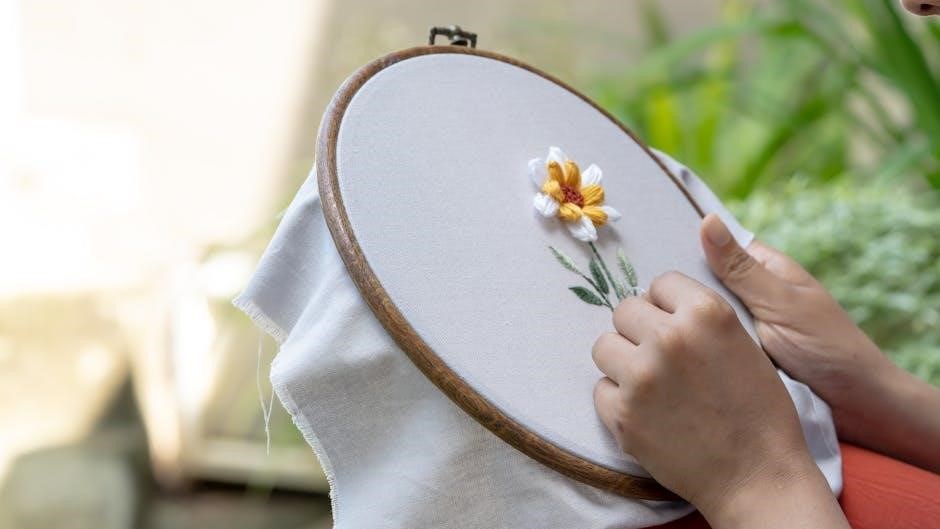
What is an Embroidery Placement Guide?
An embroidery placement guide is essentially a template, often printed on paper, designed to visually indicate the precise location for your embroidery design on a garment or fabric. These guides are particularly useful when dealing with multiple items, ensuring consistency across all pieces – a crucial aspect for businesses like Miami Stitch providing custom embroidery for uniforms and promotional apparel.
These guides aren’t just random markings; they’re carefully considered layouts that account for garment construction, wear patterns, and aesthetic balance. They can range from simple crosses or lines indicating a pocket position to more complex outlines showing the full design area.
The benefit of a printable guide, as opposed to marking directly on fabric, is its non-permanence and reusability. It allows for adjustments and test placements without damaging the material. Whether you’re a beginner following a kit like CYANFOUR’s or an experienced crafter, a guide streamlines the process, reducing errors and saving valuable time, as emphasized in various embroidery resources available online.
Ultimately, it’s about achieving a professional finish, similar to the expert craftsmanship offered by companies specializing in stitching.
Why Use a Printable Guide?
Utilizing a printable embroidery placement guide offers numerous advantages, significantly enhancing the efficiency and quality of your projects. For businesses like Miami Stitch, consistency is paramount, and guides ensure uniform design placement across multiple garments, crucial for branding and professional appearance.
These guides minimize errors, saving both time and materials. Instead of repeatedly marking fabric – a process prone to inaccuracies – a reusable template provides a reliable reference point. This is especially helpful for beginners learning techniques from kits like ETSPIL or CYANFOUR, reducing frustration and improving results.
Printable guides also allow for easy visualization and adjustments before committing to stitching. You can test different placements, ensuring the design complements the garment’s shape and style. Furthermore, they prevent direct marking of fabric, avoiding potential discoloration or damage, a consideration highlighted in stabilizer guides from Stitch America, Inc.
Ultimately, they contribute to a cleaner, more professional finish, elevating your embroidery work.
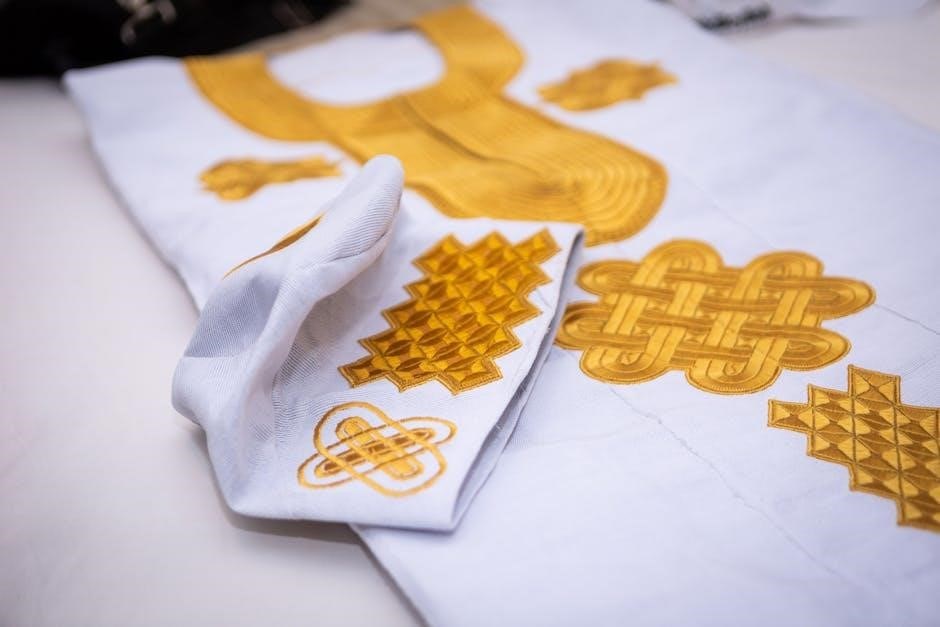
Understanding Embroidery Stabilizers
Embroidery stabilizers are essential companions to printable placement guides, providing necessary support during stitching, ensuring design integrity, and preventing fabric distortion, as advised by experts.
Types of Machine Embroidery Stabilizers
Selecting the correct stabilizer is crucial when paired with printable embroidery placement guides for optimal results. Different fabrics demand different levels of support, and understanding these options is key to preventing puckering or design distortion.
Cut-away stabilizers, as suggested in various guides, provide the most robust support, ideal for dense designs or stretchy fabrics, remaining fully intact after stitching. Tear-away stabilizers are easier to remove, suitable for lighter designs on stable woven fabrics, but require careful tearing to avoid damage.
Wash-away stabilizers dissolve in water, perfect for delicate fabrics or when a completely invisible backing is desired, often used with free-standing lace. Miami Stitch emphasizes quality, and choosing the right stabilizer complements their expert craftsmanship. Beginners, utilizing kits like CYANFOUR, benefit from understanding these distinctions for successful projects.
Proper stabilizer choice, alongside accurate placement guided by printable templates, ensures professional-looking embroidery every time.
Cut-Away Stabilizers
Cut-away stabilizers are the workhorse of machine embroidery, providing exceptional support, particularly when utilizing printable embroidery placement guides for precise design positioning. They remain fully intact underneath the stitching, offering maximum stabilization, crucial for dense designs or fabrics prone to stretching.
This makes them ideal for knits, jerseys, and other flexible materials, preventing distortion during and after the embroidery process. Miami Stitch likely utilizes cut-away stabilizers for projects requiring durability and shape retention, like corporate uniforms.
When combined with a printable guide, cut-away stabilizers ensure your design remains exactly where intended, even with fabric movement. While requiring trimming after stitching, the added stability is invaluable. Beginners using kits like ETSPIL will find cut-away stabilizers simplify complex designs, offering a solid foundation for learning.
Properly hooping with cut-away, alongside a placement guide, guarantees professional results.
Tear-Away Stabilizers
Tear-away stabilizers offer a convenient option for machine embroidery, especially when paired with printable embroidery placement guides for accurate design transfer. As the name suggests, these stabilizers are carefully torn away from the back of the finished embroidery, leaving minimal residue.
They are best suited for woven fabrics where significant stretch isn’t a concern, providing sufficient support during stitching without the permanent structure of cut-away. Utilizing a guide ensures precise placement before stitching commences, maximizing the stabilizer’s effectiveness.
While less robust than cut-away, tear-away is ideal for lighter designs and projects where a softer hand-feel is desired. Stitch America, Inc. likely recommends tear-away for specific fabric types. Beginners using embroidery kits may find tear-away easier to manage initially.
Careful tearing is essential to avoid damaging stitches; a printable guide aids in minimizing the need for excessive handling.
Wash-Away Stabilizers
Wash-away stabilizers represent a unique solution for machine embroidery, particularly beneficial when combined with printable embroidery placement guides for intricate designs. These stabilizers completely dissolve in water, leaving no trace behind – ideal for lace, sheer fabrics, or projects requiring an exceptionally soft finish.
Using a placement guide is crucial with wash-away, as the stabilizer becomes fragile when wet, making re-positioning impossible. Miami Stitch might utilize this for delicate apparel. They are excellent for freestanding lace or when you want a completely invisible support.
However, careful consideration is needed regarding thread type and wash temperature to ensure complete dissolution. Beginners using kits like those from CYANFOUR should follow instructions closely.
The guide’s accuracy minimizes the risk of distortion during washing, ensuring the embroidery remains perfectly aligned. Proper stabilizer choice, guided by a printable template, is key to success.
Choosing the Right Stabilizer for Your Fabric
Selecting the appropriate stabilizer is paramount for successful embroidery, and a printable placement guide complements this process by ensuring accurate application. The fabric’s characteristics dictate the stabilizer type; a misstep can lead to puckering or design distortion, issues professionals like those at Miami Stitch diligently avoid.
Consider the fabric weight and stretch. Lightweight, sheer materials benefit from wash-away stabilizers, while knits require cut-away or tear-away to prevent distortion. Using a guide alongside the stabilizer ensures consistent placement, regardless of fabric type.
Beginner kits, such as those from ETSPIL, often recommend specific stabilizers for their projects. Always hoop stabilizer with the fabric, as advised in various guides, and utilize temporary spray adhesive for secure adhesion.
A well-chosen stabilizer, guided by a printable template, provides the necessary support and stability for a flawless embroidered finish.
Stabilizer for Knitted Fabrics
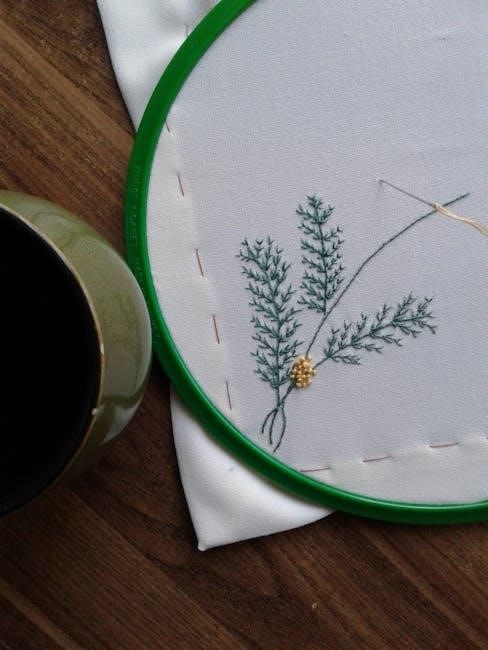
Knitted fabrics present unique challenges due to their inherent stretch and tendency to distort during embroidery. Therefore, stabilizers for knits must provide robust support without compromising the fabric’s flexibility. A printable embroidery placement guide is crucial here, ensuring the stabilizer is accurately positioned to counteract stretching.
Cut-away stabilizers are generally preferred for knits, offering maximum support and preventing puckering, especially for dense designs. However, tear-away stabilizers can be used for lighter designs, provided they are carefully removed to avoid fabric distortion.
Miami Stitch emphasizes the importance of proper stabilization for apparel, and a guide aids in consistent application. Utilizing temporary spray adhesive, as recommended in various guides, further secures the stabilizer to the knit.
Combining the right stabilizer with a precise placement guide yields professional results on even the most challenging knit fabrics.
Stabilizer for Woven Fabrics
Woven fabrics, unlike knits, generally possess greater stability, offering more flexibility in stabilizer choices. However, a printable embroidery placement guide remains essential for accurate design positioning, particularly on fabrics prone to slight shifts during hooping.
Tear-away stabilizers are often suitable for woven fabrics, providing sufficient support during stitching and allowing for clean removal afterward. Cut-away stabilizers are ideal for heavier designs or fabrics that require extra reinforcement, mirroring the approach for knits.
Wash-away stabilizers can also be utilized, especially for delicate woven materials where minimal residue is desired. Stitch America, Inc. highlights the importance of selecting the correct stabilizer type.
Regardless of the chosen stabilizer, a precise placement guide, combined with techniques like temporary spray adhesive, ensures professional embroidery results on woven fabrics, as emphasized by various embroidery resources.
Preparing Your Fabric and Design
Proper preparation is crucial; hooping fabric with stabilizer, guided by a printable template, ensures design accuracy. Temporary spray adhesive further secures everything, preventing shifting during stitching.
This meticulous approach, recommended by multiple sources, guarantees professional results, mirroring the quality of Miami Stitch’s custom work.
Hooping Fabric with Stabilizer
Hooping fabric correctly with stabilizer is foundational for successful machine embroidery, and a printable placement guide streamlines this process. Begin by adhering the stabilizer to the fabric using temporary spray adhesive – a technique consistently recommended for preventing shifting during stitching.
Carefully align your printed placement guide onto the stabilizer, ensuring the design’s intended position is accurately reflected. Then, center the fabric and stabilizer (with the guide) within the embroidery hoop, tightening it firmly but not excessively.
The goal is a taut, drum-like surface, free of wrinkles or distortions. Always hoop stabilizer with the fabric whenever possible, as emphasized in beginner guides. This combined approach, utilizing both a guide and proper hooping, minimizes puckering and ensures consistent, high-quality embroidery, comparable to the craftsmanship offered by professionals like Miami Stitch.
Remember, a secure hoop and well-adhered stabilizer are essential for preventing design movement and achieving a polished final product.
Using Temporary Spray Adhesive
Temporary spray adhesive is a crucial aid when working with printable embroidery placement guides, particularly for fabrics prone to shifting. Applying a light, even coat to the stabilizer before adhering the fabric ensures a secure bond, preventing movement during the hooping and stitching process.
This technique is consistently recommended as a best practice, especially for delicate or stretchy materials. Align your printed placement guide on the stabilizer before applying the adhesive, guaranteeing accurate design positioning.
Allow the adhesive to become tacky before carefully smoothing the fabric onto the stabilizer, referencing the guide for precise alignment. This method is particularly beneficial when creating custom designs or working with multiple layers, mirroring the attention to detail found in services like those offered by Miami Stitch.
Remember to use a temporary adhesive specifically designed for embroidery, ensuring it won’t leave residue on your fabric or needle.
Printable Placement Guide Templates
Readily available templates simplify embroidery, offering pre-designed layouts for common areas like pockets and sleeves, streamlining projects for both beginners and experienced crafters.
These guides, used with kits like CYANFOUR’s, ensure consistent, professional results, enhancing designs on apparel and various fabric crafts.
Common Embroidery Placement Areas
Embroidery flourishes beautifully in strategically chosen locations, enhancing garments and textiles. Pocket placement is a classic choice, adding a personalized touch to shirts, jackets, and bags; guides ensure consistent positioning for branded apparel, vital for businesses like Miami Stitch.
Sleeve placement, typically on the upper arm, offers subtle branding or decorative detail, ideal for uniforms or athletic wear. Accurate guides prevent distortion during wear, a concern addressed in stabilizer guides.
Center front or back panels of shirts and jackets provide prominent display areas for logos or intricate designs. Hat placement requires careful consideration of the hat’s structure and wearability, benefiting from precise templates.
Furthermore, collar placements are popular for monograms or small logos, while bag and tote placements depend on the bag’s design and intended use. Utilizing printable guides, alongside techniques from embroidery kits like ETSPIL, guarantees professional results.
Pocket Placement
Pocket embroidery is a highly visible and popular choice for adding logos, monograms, or decorative designs to shirts, jackets, and workwear. A printable placement guide is crucial for consistent positioning, especially for bulk orders handled by businesses like Miami Stitch.
Typically, designs are centered horizontally on the pocket, with consideration given to the pocket’s height and width. Guides help determine the optimal distance from the pocket’s edge, preventing the design from being obscured or awkwardly placed.
For left-chest pocket placements, standardization is key for a professional look. Utilizing a template ensures uniformity across all garments, mirroring the quality emphasized in embroidery kits like those from CYANFOUR.
Proper stabilizer selection, as highlighted by Stitch America, Inc., is vital for pocket embroidery, preventing puckering and ensuring design longevity. Accurate guides, combined with quality materials, deliver a polished, professional finish.
Sleeve Placement
Sleeve embroidery offers a subtle yet impactful branding opportunity, frequently utilized for corporate logos or individual personalization. A printable placement guide is essential for consistent design application, particularly important for businesses like Miami Stitch handling large-scale orders.
Common sleeve placement is on the upper arm, typically 2-3 inches from the shoulder seam. Guides ensure consistent vertical and horizontal positioning across all garments, maintaining a professional aesthetic.
Consideration must be given to arm movement; avoid placing designs where they might distort or become uncomfortable. Templates help visualize the design’s appearance in various arm positions.
Stabilizer choice, as emphasized by resources like Stitch America, Inc., is critical for sleeve embroidery due to fabric stretch. Utilizing a guide alongside appropriate stabilization prevents puckering and ensures design durability, mirroring the quality found in beginner kits like ETSPIL.
Creating Custom Guides

Custom printable embroidery placement guides offer flexibility beyond pre-designed templates, catering to unique designs and garment styles. This is particularly useful for personalized projects or when working with unconventional apparel, as often seen with creators utilizing Miami Stitch’s services.
Measuring and marking involves accurately determining the desired design position and transferring those measurements to a printable template. Precise measurements are crucial to avoid skewed or off-center embroidery.
Digital design tools, like graphic design software, allow for creating detailed guides with precise coordinates. These guides can be easily adjusted and reprinted as needed, offering scalability for larger production runs.
Remember to account for hoop size and stabilizer requirements when designing your guide. Proper preparation, alongside understanding stabilizer types (as detailed in beginner guides), ensures a smooth embroidery process, similar to the step-by-step instructions in kits like CYANFOUR.
Measuring and Marking
Accurate measuring and marking are foundational to creating effective printable embroidery placement guides. Begin by carefully measuring the garment to determine the ideal design center point, considering factors like collar placement or pocket alignment, crucial for projects like those handled by Miami Stitch.
Utilize a clear ruler or measuring tape, and mark the fabric lightly with a fabric-safe marker or tailor’s chalk. Avoid permanent markers that could stain or interfere with the embroidery process.
For symmetrical designs, ensure measurements are mirrored on both sides of the garment. Double-check all measurements before finalizing the guide, minimizing errors and rework, a practice emphasized in beginner embroidery resources.
Remember to account for hoop size and stabilizer overlap when transferring measurements to your printable template. Precise marking, combined with appropriate stabilizer use (as discussed by Stitch America, Inc.), guarantees professional results.
Digital Design Tools
Leveraging digital design tools significantly streamlines the creation of custom printable embroidery placement guides. Software like Adobe Illustrator or Inkscape allows for precise design layout and measurement accuracy, surpassing traditional methods.
These tools enable you to create templates with specific dimensions, incorporating key garment features and design placement indicators. You can easily adjust and replicate guides for various sizes and styles, beneficial for businesses like Miami Stitch handling diverse orders.
Consider utilizing pre-made embroidery design software features or importing garment mockups as backgrounds for accurate visualization. Digital guides offer flexibility and scalability, simplifying complex placements.
Furthermore, digital tools facilitate easy sharing and collaboration with team members, ensuring consistency across all embroidery projects. Combined with careful measuring (as discussed previously), these tools elevate guide creation, mirroring the precision found in kits like those from CYANFOUR.
Advanced Techniques & Considerations
Mastering advanced techniques involves adapting placement guides for challenging fabrics and designs, preventing puckering, and ensuring design integrity, like Stitch America recommends.
Careful stabilizer selection and temporary adhesive use (as noted on 20.02.2024) are crucial for optimal results and professional finishes.
Dealing with Stretchable Fabrics
Embroidery on stretchable fabrics, such as knits, demands a specialized approach to placement and stabilization to prevent distortion during wear and washing. Standard printable placement guides are a great starting point, but require adaptation.
Firstly, utilize a cut-away stabilizer, as it provides the most robust support, preventing the fabric from stretching during the embroidery process. Hoop the stabilizer with the fabric, ensuring a tight grip – a technique consistently recommended for optimal results. Consider applying a temporary spray adhesive, as suggested, to further secure the fabric to the stabilizer, minimizing shifting.
When using your printable guide, mark the design placement carefully, accounting for potential fabric movement. Reduce stitch density slightly to allow for fabric give. Post-embroidery, carefully trim away excess stabilizer, avoiding any damage to the stitches. Remember, Miami Stitch emphasizes attention to detail, and this is especially critical with delicate materials. Proper preparation and stabilization are key to achieving a professional finish on stretchable fabrics.
Preventing Puckering and Distortion
Puckering and distortion are common challenges in machine embroidery, often stemming from improper stabilization or tension. Utilizing a printable embroidery placement guide is only the first step; correct execution is vital.
Ensure your chosen stabilizer – tear-away, cut-away, or wash-away – is appropriate for your fabric type. For woven fabrics, a tear-away stabilizer might suffice, but knitted fabrics generally require cut-away for greater support. Always hoop the stabilizer with the fabric, creating a unified base. Temporary spray adhesive can further prevent shifting during stitching, a technique often recommended.
Pay close attention to your machine’s tension settings. Incorrect tension can cause the fabric to pull or bunch. Test stitch on a scrap piece of fabric before beginning your project. Following the guidance of resources like those from Stitch America, Inc., and carefully monitoring stitch density will minimize distortion. Remember, consistent quality, like that offered by Miami Stitch, relies on meticulous attention to these details.
Resources and Further Learning
Expanding your embroidery knowledge is a continuous journey. Numerous online resources and kits cater to all skill levels, from beginner-friendly options like the CYANFOUR Embroidery Kit to more advanced techniques.
For comprehensive guidance on machine embroidery stabilizers, explore resources offered by companies like Stitch America, Inc., and the informative guides available since 2020; Miami Stitch provides expert craftsmanship and can offer insights into best practices for custom projects.
Websites featuring tutorials, such as those accompanying the ETSPIL Embroidery Kit, demonstrate essential skills like floss separation and knot tying. Consider investing in a fabric embroidery book for portable learning, offering 30 essential hand embroidery techniques. Remember to check dates, as information evolves – a guide from August 2017 may need updating. Continued practice and exploration will refine your skills and unlock creative potential.