Archive: April 22, 2026

maxkare treadmill manual

MaxKare Treadmill Manual: A Comprehensive Guide

Welcome! This manual provides essential guidance for safely operating and maintaining your MaxKare treadmill, ensuring optimal performance and longevity for years to come.

Understanding the features, safety precautions, and maintenance procedures detailed herein will maximize your fitness experience and prevent potential issues.

This guide covers everything from initial setup and operation to troubleshooting common problems, helping you achieve your health goals effectively and securely.

Understanding Your MaxKare Treadmill

Familiarization is Key: Your MaxKare treadmill is a sophisticated fitness machine designed for home use, offering a convenient and effective way to achieve your workout goals. Before commencing any exercise routine, it’s crucial to thoroughly understand its components and functionalities. This section will detail the treadmill’s core features, including the running surface, console display, safety mechanisms, and adjustable settings.

The treadmill’s frame is constructed from durable steel, providing stability and supporting users up to a specified weight capacity – always check your model’s specifications. The running belt is multi-layered, designed to absorb impact and provide a comfortable running experience. The console houses the control panel, displaying vital workout metrics like speed, incline, time, distance, and calories burned.

Understanding the emergency stop features, such as the safety key and emergency stop button, is paramount for safe operation. Proper knowledge of these features ensures immediate control in unforeseen circumstances. Regularly reviewing this section will enhance your confidence and maximize the benefits of your MaxKare treadmill.

Unboxing and Initial Setup

Careful Unpacking is Essential: Begin by carefully unpacking your MaxKare treadmill, ensuring all components are present and undamaged. Retain the original packaging for potential future transport or returns. Inventory the parts list provided in the manual, confirming you have the treadmill base, upright posts, console, running belt, safety key, and all necessary hardware.

Assembly typically involves attaching the upright posts to the base using the provided bolts and washers. Connect the console to the posts, ensuring all cables are securely fastened. Next, carefully unroll and center the running belt, adjusting tension as needed according to the manual’s instructions.

Before the first use, inspect all connections for tightness and stability. Plug the treadmill into a grounded outlet and perform a brief test run at a low speed to verify proper operation. Familiarize yourself with the console’s functions and safety features before starting a full workout.

Safety Precautions and Warnings

Prioritize Your Well-being: Always read this entire manual before operating your MaxKare treadmill. Keep children and pets away from the treadmill at all times. Never operate the treadmill if you feel unwell or are experiencing dizziness. Wear appropriate athletic shoes and clothing during use, avoiding loose garments that could become entangled.

Familiarize yourself with the emergency stop mechanism and safety key – understand how to use them immediately in case of an emergency. Maintain a firm grip on the handrails, especially when adjusting speed or incline. Do not exceed the maximum user weight capacity specified in this manual.

Inspect the treadmill before each use, checking for any loose parts or damage. Disconnect the power cord when not in use or during maintenance. Never attempt to repair the treadmill yourself; contact qualified service personnel for assistance.

Components and Features

Explore the Design: This section details the key parts of your MaxKare treadmill, from the robust motor and spacious running belt to the intuitive console and incline controls.

Treadmill Console Overview

Navigating the Interface: The MaxKare treadmill console serves as your central command center, providing real-time workout data and control options; The large, backlit LCD screen prominently displays crucial metrics such as speed, incline, time, distance, and calories burned. Below the screen, you’ll find dedicated buttons for speed adjustment (increase/decrease) and incline control, allowing for quick and precise modifications during your workout.

Functionality Details: The console also incorporates preset workout programs, selectable via dedicated buttons, offering varied training routines. A pulse grip, integrated into the handlebars, enables heart rate monitoring, displayed directly on the screen. A start/stop button initiates and terminates workouts, while an emergency stop clip provides an immediate safety shutdown. The console may also feature a USB port for data transfer or device charging, and potentially built-in speakers for audio playback. Familiarize yourself with each button and function for a seamless exercise experience.

Motor and Running Belt Details

Powerful Performance: Your MaxKare treadmill is equipped with a robust motor, designed for consistent and reliable performance. The motor’s horsepower (HP) rating determines its capability to handle varying user weights and workout intensities; consult your model’s specifications for precise details. Proper motor care, including avoiding prolonged high-intensity use without adequate cooling, extends its lifespan.

Belt Specifications: The running belt is a multi-layered system, crucial for comfortable and safe running. It consists of a durable fabric surface bonded to a robust base layer. Regularly inspect the belt for wear and tear, ensuring it remains free of cracks or fraying. Maintaining proper belt tension is vital; a loose belt can slip, while an overly tight belt strains the motor. Consistent lubrication, using a silicone-based lubricant, minimizes friction and extends belt life, preventing premature wear and ensuring smooth operation.

Incline and Speed Controls

Precise Adjustments: Your MaxKare treadmill features intuitive incline and speed controls, allowing you to customize your workout intensity. Speed is typically adjusted using buttons on the console, often with quick-select options for common paces. The incline function simulates uphill running, increasing cardiovascular demand and engaging different muscle groups. Adjust incline levels using dedicated buttons or a digital interface.

Control Types: Models may offer both manual and automatic control options. Manual adjustments require direct button presses, while automatic modes utilize pre-programmed workouts or user-defined profiles. Familiarize yourself with the console’s layout and functions. Gradual adjustments are recommended to avoid sudden changes in intensity. Always prioritize safety by starting at lower speeds and inclines, gradually increasing as your fitness level improves.

Operation and Usage

Begin your fitness journey! This section details powering the treadmill on/off, initiating workouts, and dynamically adjusting speed and incline for optimal results.

Powering On and Off

Initiating Operation: To power on your MaxKare treadmill, locate the power switch, typically situated near the power cord inlet on the base of the unit. Ensure the treadmill is plugged into a grounded electrical outlet. Flip the switch to the ‘On’ position; the console display should illuminate, indicating the system is initializing.

Safety Considerations: Before starting any workout, verify the safety key is securely inserted into the console. This crucial safety feature will automatically halt the treadmill if you stumble or lose your balance. Always stand on the side rails before pressing the ‘Start’ button.

Shutting Down: To power off, first reduce the speed to a complete stop. Then, press the ‘Stop’ button on the console. Finally, flip the power switch to the ‘Off’ position. Never unplug the treadmill while it is still running, as this could cause damage to the motor or console. Disconnecting power preserves energy and enhances safety.

Starting and Stopping Workouts

Commencing Your Session: After powering on and ensuring the safety key is engaged, select your desired workout program using the console buttons. Input your preferred speed and incline levels. Gently step onto the running belt while holding onto the handrails for stability. Press the ‘Start’ button to initiate your workout; the belt will begin to move at the selected speed.

During Exercise: Maintain a firm grip on the handrails if needed, especially when adjusting speed or incline. Monitor your heart rate using the integrated sensors or a compatible chest strap. Stay hydrated throughout your workout.

Concluding Your Session: To stop, press the ‘Stop’ button. The running belt will gradually decelerate to a halt. Allow the belt to come to a complete stop before stepping off. Remember to power off the treadmill after use, following the instructions in the previous section;

Adjusting Speed and Incline

Speed Control: The MaxKare treadmill offers precise speed adjustments via the ‘Speed Up’ and ‘Speed Down’ buttons on the console. Incremental increases or decreases are typically applied with each press. Some models feature quick-speed buttons for pre-set levels. Observe the console display to monitor the current speed in miles per hour (MPH) or kilometers per hour (KMH).

Incline Control: Similarly, the ‘Incline Up’ and ‘Incline Down’ buttons allow you to modify the treadmill’s incline level. This simulates uphill walking or running, increasing workout intensity. The incline is usually displayed as a percentage, representing the gradient.

Combined Adjustments: Experiment with combining speed and incline adjustments to create a challenging and personalized workout. Start slowly and gradually increase intensity as your fitness level improves. Always prioritize safety and maintain control.

Maintenance and Troubleshooting

Regular upkeep is crucial for optimal performance and longevity of your MaxKare treadmill; addressing issues promptly prevents further damage and ensures safety.

Regular Cleaning Procedures

Maintaining a clean treadmill is vital for both hygiene and performance. After each use, wipe down the console, handlebars, and running belt with a soft, damp cloth to remove sweat and dust. Avoid abrasive cleaners, as they can damage the surfaces.

Weekly, perform a more thorough cleaning. Unplug the treadmill before starting. Vacuum around the base to remove dust buildup, paying attention to the motor compartment vents for optimal cooling. Inspect the running belt for debris and wipe it down with a mild soap and water solution, ensuring it’s completely dry before resuming use.

Monthly, check and tighten any loose bolts or screws. A clean treadmill operates more efficiently and extends its lifespan, providing a safer and more enjoyable workout experience. Remember to always refer to the full manual for detailed instructions and safety guidelines.

Belt Alignment and Lubrication

Proper belt alignment prevents uneven wear and ensures a smooth, safe running surface. Regularly check if the belt tracks to the center; if it drifts, use the adjustment bolts at the rear of the treadmill to make small corrections. Consult the manual for specific bolt locations and adjustment procedures.

Lubrication is crucial to reduce friction and extend belt life. Use only silicone-based treadmill lubricant, applying it evenly under the belt according to the manufacturer’s instructions – typically every 30-60 running hours.

Avoid oil or water-based lubricants, as they can damage the belt and deck. Consistent alignment and lubrication contribute to quieter operation and prevent costly repairs, maximizing your treadmill’s performance and longevity.

Common Error Codes and Solutions

Error codes indicate specific issues with your MaxKare treadmill. “E1” often signals a communication error between the console and the motor controller; try restarting the treadmill. “E2” typically indicates an incline motor malfunction – contact customer support. “E3” suggests a speed sensor issue, potentially requiring professional repair.

“E4” often relates to overload protection activation, meaning the motor is overheating; allow the treadmill to cool down. “E5” can signify a safety key problem – ensure it’s properly inserted. Always consult the full error code list in your manual.

Before contacting support, try power cycling the treadmill and checking all connections; Document the error code and circumstances for efficient troubleshooting.

Advanced Features & Settings

Explore personalized workouts with preset programs, user profiles, and heart rate monitoring! Customize your fitness journey for optimal results and enjoyment.

Preset Workout Programs

Maximize your training efficiency with the diverse range of preset workout programs integrated into your MaxKare treadmill. These programs are meticulously designed by fitness professionals to cater to various fitness levels and goals, offering a structured approach to your exercise routine.

Choose from options like Hill Climb, which simulates outdoor running on inclines, Interval Training for high-intensity bursts followed by recovery periods, and Fat Burn, optimized for calorie expenditure. The Manual program allows for complete customization of speed and incline, while Random programs provide unpredictable challenges.

Each program displays key metrics such as time, distance, calories burned, and heart rate (if applicable) throughout the workout. To select a program, simply navigate through the console menu using the control buttons and press ‘Start’. The treadmill will automatically adjust speed and incline according to the chosen program’s parameters, allowing you to focus solely on your workout.

User Profile Setup

Personalize your treadmill experience by creating individual user profiles. This feature allows the MaxKare treadmill to track your workout data accurately and provide tailored insights into your progress. Setting up profiles is crucial for multiple users sharing the same machine, ensuring each person’s statistics remain separate and precise.

To create a profile, navigate to the ‘User’ or ‘Profile’ section on the console. You’ll typically be prompted to enter personal information such as age, weight, height, and gender. Accurate data input is vital for calculating calorie burn and other metrics correctly.

Once created, each user can log in before starting a workout, and the treadmill will store their individual workout history. This enables you to monitor your improvements over time and adjust your fitness plan accordingly. Some models may also allow setting personalized goals and preferences within each profile.

Heart Rate Monitoring Functionality

Maximize your workout efficiency with the MaxKare treadmill’s integrated heart rate monitoring system. This feature allows you to track your pulse in real-time, ensuring you’re exercising within your target heart rate zone for optimal results. Most models offer two primary methods for heart rate detection: handgrip sensors and a compatible chest strap (often sold separately).

To use the handgrip sensors, simply hold the metallic contacts on the handlebars during your workout. The console will display your current heart rate. For greater accuracy and convenience, a chest strap transmits data wirelessly to the treadmill.

Monitoring your heart rate helps you gauge exercise intensity and prevent overexertion. Utilize the console’s display to stay informed and adjust speed or incline as needed to maintain your desired heart rate zone.

Safety Features Explained

Prioritize your well-being! This section details crucial safety mechanisms integrated into your MaxKare treadmill, designed to prevent accidents and ensure secure operation.

Emergency Stop Mechanism

Critical Safety Feature: Your MaxKare treadmill is equipped with an emergency stop mechanism, a vital safety feature designed for immediate halting of the running belt in unforeseen circumstances. This system prioritizes user safety, allowing for quick intervention during emergencies.

The emergency stop is typically implemented as a brightly colored clip, often red, attached to the treadmill console via a coiled safety lanyard. One end of the lanyard clips onto your clothing – a shirt or athletic wear is ideal – ensuring the treadmill stops if you stumble or lose your balance.

How it Works: When the clip is detached from the console, it immediately triggers the treadmill to cease operation. Regularly test this function before each workout to confirm its responsiveness. Familiarize yourself with its location and operation to react swiftly if needed. Never operate the treadmill without properly attaching the safety clip. This simple precaution can prevent serious injury.

Safety Key Usage

Essential for Safe Operation: The safety key is a crucial component of your MaxKare treadmill, designed to automatically stop the machine if you lose your footing or experience an unexpected fall during exercise. It’s a primary safety measure, preventing potential injuries.

This key, usually a small plastic clip, connects the treadmill console to your clothing via a durable lanyard. Securely attach one end of the lanyard to the designated slot on the console and the other end to a secure piece of your attire – avoid loose clothing.

Proper Functionality: If the safety key is detached during operation, the treadmill will instantly stop, protecting you from continued movement. Always test the key’s functionality before each workout. Ensure the lanyard allows for a full range of motion without excessive slack. Never bypass or disable the safety key; it’s a non-negotiable safety feature.

Overload Protection System

Safeguarding the Motor & Electrical Components: Your MaxKare treadmill incorporates a sophisticated overload protection system, designed to prevent damage to the motor and electrical components from excessive strain or power surges. This system is a vital safety feature, extending the lifespan of your machine.

The system continuously monitors the motor’s current draw. If the load exceeds the motor’s capacity – perhaps due to excessive user weight, prolonged high-speed operation, or internal mechanical issues – the overload protection will automatically activate.

System Response: Activation typically results in the treadmill stopping abruptly and potentially displaying an error code on the console. Do not attempt to restart the treadmill immediately after an overload event. Allow it to cool down and investigate the cause before resuming use. Consistent overloading can indicate a need for professional maintenance.

th4110d1007 manual

Honeywell TH4110D1007 Manual: A Comprehensive Overview

This manual details the Honeywell TH4110D1007, a programmable thermostat offering basic comfort control and energy savings for conventional heating and cooling systems.

The Honeywell TH4110D1007 is a member of the PRO programmable thermostat family, designed for straightforward temperature management in residential settings. This thermostat provides users with a simple, yet effective, method for controlling their home’s heating and cooling systems. It’s particularly suited for systems with one heating stage and one cooling stage (1H/1C).

As a programmable device, the TH4110D1007 allows homeowners to establish customized temperature schedules, potentially leading to energy savings and increased comfort. While now discontinued by the manufacturer, it remains a popular choice due to its reliability and ease of use. The thermostat operates on 24V AC power and features a standard display for clear readability. It’s designed for wall-mount installation and is finished in a premier white color.

Key Features and Specifications

The Honeywell TH4110D1007 boasts several key features, including 5-2 day programmable scheduling, allowing for different settings on weekdays and weekends. It’s designed for 1-Heat and 1-Cool systems, making it compatible with many standard HVAC setups. The thermostat requires 24V AC power with a current draw of 1 Amp.

Regarding specifications, the TH4110D1007 operates within a temperature range of 50 to 99 degrees Fahrenheit. It features a standard display for easy viewing of settings and current temperature. Its dimensions are suited for typical wall mounting. Although discontinued, its robust design and simple functionality continue to appeal to users seeking a reliable, basic programmable thermostat for their homes.

Understanding the Thermostat’s Functionality

The Honeywell TH4110D1007 provides programmable temperature control, enabling users to customize heating and cooling schedules for optimal comfort and energy efficiency.

Programming Capabilities: 5-2 Day Scheduling

The Honeywell TH4110D1007 thermostat features a convenient 5-2 day scheduling program. This allows users to set different temperature programs for weekdays versus weekends, optimizing comfort and energy savings based on typical occupancy patterns. You can program different setpoints for wake, leave, return, and sleep periods each day.

This flexibility ensures that energy isn’t wasted heating or cooling an empty home during work or school hours, and provides comfortable temperatures when occupants are present. The thermostat stores these programmed schedules, automatically adjusting the temperature according to the user’s preferences. Simple programming makes it easy to tailor the system to individual lifestyles and needs, maximizing both comfort and cost savings.

Heat and Cool Control: 1-Heat, 1-Cool Systems

The Honeywell TH4110D1007 is specifically designed to control conventional 1-Heat, 1-Cool heating and cooling systems. This means it’s compatible with systems that have a single heating source (like a furnace) and a single cooling source (like an air conditioner). It’s not designed for heat pumps or multi-stage systems.

The thermostat seamlessly switches between heating and cooling modes based on the programmed setpoints and the current room temperature. Users can independently set desired temperatures for both heating and cooling, ensuring optimal comfort throughout the year. The simple interface allows for easy selection of heat, cool, or auto modes, providing straightforward control over the home’s climate.

Voltage and Current Requirements: 24V AC, 1 Amp

The Honeywell TH4110D1007 thermostat operates on a low-voltage system, requiring 24V AC power. This is a standard voltage for most residential heating and cooling systems. It’s crucial to ensure your HVAC system provides this voltage before installation to avoid damage to the thermostat or the system itself.

The thermostat has a maximum current draw of 1 Amp. This specification dictates the types of HVAC components it can reliably control. Exceeding this current limit could lead to malfunction. Proper wiring and adherence to the wiring diagram are essential for safe and effective operation. Always disconnect power before working with the thermostat’s wiring.

Installation and Wiring

Proper installation involves verifying HVAC compatibility, carefully connecting wires using the provided diagram, and securely mounting the thermostat on a wall.

Compatibility with HVAC Systems

The Honeywell TH4110D1007 thermostat is designed for use with standard 24VAC heating and cooling systems. Specifically, it supports 1-heat and 1-cool systems, making it suitable for most residential applications.

However, it’s crucial to confirm compatibility before installation. This thermostat is not designed for use with heat pump systems requiring more complex control sequences. Ensure your system operates on a conventional setup.

Carefully review your existing wiring and HVAC system documentation. If you have a heat pump, millivolt system, or line voltage system (120V/240V), the TH4110D1007 is likely not the correct thermostat. Incorrect installation can damage both the thermostat and your HVAC equipment. When in doubt, consult a qualified HVAC technician.

Wiring Diagram and Terminal Identification

Proper wiring is essential for the correct operation of the Honeywell TH4110D1007. Terminals are clearly labeled on the thermostat backplate. Common terminals include Rh (24V AC power), Rc (24V AC power – often jumpered to Rh), W (heat), Y (cool), and C (common – may not be required for all systems).

Always disconnect power to your HVAC system at the breaker before beginning any wiring. A typical wiring configuration involves connecting the corresponding wires from your existing thermostat to the appropriately labeled terminals on the TH4110D1007.

Refer to the detailed wiring diagram included with the thermostat or available online. Incorrect wiring can cause system malfunction or damage. If you are uncomfortable with electrical work, consult a qualified HVAC technician for assistance.

Mounting the Thermostat: Wall Mount Installation

The Honeywell TH4110D1007 is designed for standard wall mounting. Begin by removing your existing thermostat and carefully labeling the wires. Use the provided mounting screws and anchors to securely attach the thermostat baseplate to the wall. Ensure the baseplate is level for accurate temperature readings.

Route the wires through the opening in the baseplate and connect them to the appropriate terminals (refer to the wiring diagram). Gently push any excess wire back into the wall. Carefully align and snap the thermostat body onto the baseplate.

Verify a secure connection before restoring power. The thermostat should sit flush against the wall.

Operating the Honeywell TH4110D1007

The TH4110D1007 allows users to program temperature schedules, set the current date and time, and utilize temporary or permanent override functions.

Setting the Date and Time

To accurately program your Honeywell TH4110D1007 thermostat, correctly setting the date and time is crucial. Begin by accessing the thermostat’s settings menu, typically navigated through the buttons on the faceplate. Look for options labeled “Set Date” or “Set Time.” Use the up and down arrow buttons to adjust the month, day, and year, confirming each selection.

Next, proceed to set the time. Adjust the hour and minute, paying attention to AM or PM designation. Some models may require a separate confirmation step for the time setting. Accurate timekeeping ensures that programmed schedules operate as intended, maximizing energy savings and comfort. Refer to the full manual for specific button configurations, as slight variations may exist.

Programming Temperature Schedules

The Honeywell TH4110D1007 features a 5-2 day programmable schedule, allowing distinct settings for weekdays and weekends. Access the programming mode via the thermostat’s menu. You’ll typically define separate temperature settings for “Wake,” “Leave,” “Return,” and “Sleep” periods. For each period, set your desired temperature using the up and down arrow buttons.

The thermostat remembers these settings and automatically adjusts the temperature according to your schedule. Ensure you differentiate between heating and cooling modes when programming. Review your schedule regularly to optimize comfort and energy efficiency. The 5-2 day format simplifies programming, providing consistent comfort throughout the week.

Temporary and Permanent Overrides

The Honeywell TH4110D1007 allows for both temporary and permanent overrides of your programmed schedule. A temporary override adjusts the temperature for a single period, reverting to the programmed schedule afterward. This is ideal for short-term comfort adjustments. To activate, simply adjust the temperature to your desired setting.

A permanent override, sometimes called “Hold,” maintains the adjusted temperature indefinitely until you manually cancel it. Access the “Hold” function through the thermostat’s menu. Be mindful when using permanent overrides, as they bypass energy-saving schedules. To return to the programmed schedule, select the “Run” or “Resume” option within the menu.

Troubleshooting Common Issues

Addressing problems like a non-responsive thermostat, inaccurate temperature readings, or programming difficulties is crucial for optimal performance and consistent comfort control.

Thermostat Not Powering On

If the Honeywell TH4110D1007 fails to power on, begin by verifying the power supply. Ensure the system’s power switch is active and the circuit breaker hasn’t tripped.

Carefully inspect the thermostat wiring, confirming all connections at the terminals are secure and correctly placed according to the wiring diagram. A loose wire can interrupt the power flow.

Confirm the thermostat is receiving the correct voltage – it requires 24V AC. If the issue persists, check the furnace or HVAC system’s control board for power. A faulty control board could be the root cause.

Important: Disconnect power before inspecting wiring. If you are uncomfortable with electrical work, consult a qualified HVAC technician.

Incorrect Temperature Readings

If the Honeywell TH4110D1007 displays inaccurate temperature readings, several factors could be at play. First, ensure the thermostat isn’t directly exposed to sunlight, drafts, or heat-generating appliances, as these can skew the sensor’s accuracy.

Verify the thermostat is properly calibrated. While the TH4110D1007 doesn’t offer extensive calibration options, a simple reset might help. Check for obstructions blocking airflow around the thermostat.

Compare the thermostat’s reading with a reliable thermometer placed nearby. A significant discrepancy suggests a potential sensor issue. If the problem continues, consider the thermostat’s age; sensors can degrade over time;

Programming Errors and Resetting

Encountering programming errors with the Honeywell TH4110D1007 is common, often stemming from incorrect button presses or unintended overrides. If the schedule isn’t functioning as expected, carefully review each programmed period for accuracy – day, time, and temperature settings.

To reset the thermostat to factory defaults, consult the full user manual (available online) for the specific procedure. Generally, this involves holding a combination of buttons for a set duration.

Caution: Resetting will erase all programmed schedules, requiring you to re-enter them. Before resetting, document your current settings. If errors persist after resetting, double-check the wiring connections and consider contacting a qualified HVAC technician.

Technical Specifications in Detail

The Honeywell TH4110D1007 operates on 24V AC with a 1 Amp current, features a 50-99°F temperature range, and utilizes a standard display.

Temperature Range: 50 to 99 Degrees F

The Honeywell TH4110D1007 thermostat is designed to effectively manage temperatures within a range of 50 to 99 degrees Fahrenheit. This broad spectrum allows for comfortable climate control across various seasons and geographical locations. The thermostat accurately senses ambient temperature and adjusts the HVAC system accordingly to maintain the programmed setpoints.

Operating outside this specified range may result in inaccurate readings or the thermostat’s inability to properly control the heating or cooling system. It’s crucial to ensure the thermostat is installed in a location representative of the average room temperature, away from direct sunlight or drafts, to optimize performance within this 50-99°F window. Consistent operation within this range ensures both comfort and energy efficiency.

Display Type: Standard Display

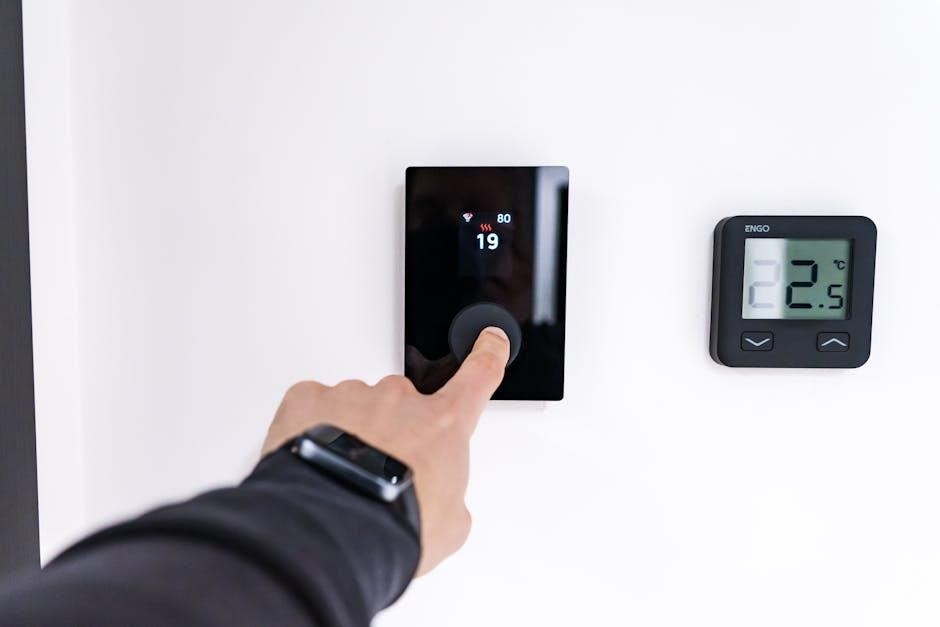
The Honeywell TH4110D1007 utilizes a standard digital display, prioritizing clarity and ease of use for fundamental temperature and programming information. This display presents essential data such as the current temperature, setpoint temperature, time, and operating mode (heat or cool) in a straightforward manner.

While not featuring advanced graphical interfaces or backlighting found in higher-end models, the standard display is designed for reliable visibility under typical indoor lighting conditions. The interface focuses on providing core functionality without unnecessary complexity, making it accessible for users seeking a simple, programmable thermostat. Its clear presentation ensures quick and easy monitoring of your home’s climate control settings.

Discontinued Status & Availability

The Honeywell TH4110D1007 has been officially discontinued by the manufacturer, Honeywell. This means that new production units are no longer being made. However, despite being discontinued, the thermostat remains available through various online retailers and distributors, though stock levels may vary considerably.

Consumers seeking to purchase this model should expect potentially limited availability and fluctuating prices; It’s advisable to check multiple sources, such as Amazon and OnlineSupply.com, to compare options. While still functional and supported for existing users, finding replacement parts may become increasingly challenging over time due to its discontinued status.

30 amp manual transfer switch

Understanding 30 Amp Manual Transfer Switches

30 amp manual transfer switches offer a safe way to connect a generator to a home’s electrical system during outages.

These switches allow selective powering of essential circuits, avoiding backfeeding into the utility grid, and ensuring electrical safety.

They are a crucial component for backup power solutions, providing peace of mind during emergencies.

What is a Manual Transfer Switch?

A manual transfer switch is a vital electrical device designed to safely connect a portable generator to a home’s wiring system during a power outage. Unlike automatic transfer switches, it requires manual operation – you physically switch the power source from the utility grid to the generator.

Specifically, a 30-amp manual transfer switch is rated to handle a maximum load of 30 amps at 240 volts. This means it can support a selection of essential circuits, like those powering refrigerators, lights, and heating systems. It prevents dangerous backfeeding – electricity flowing back into the power grid – which could harm utility workers and damage equipment.

These switches feature a transfer mechanism that isolates the home from the grid while the generator is running, ensuring a secure and controlled power supply. They are a cost-effective solution for backup power, offering a reliable alternative to whole-house generators.

Why Choose a 30 Amp Transfer Switch?

A 30 amp transfer switch strikes a balance between cost-effectiveness and functionality, making it a popular choice for many homeowners. It’s ideal for powering essential circuits during outages, without the expense of a whole-house generator system. While supporting 240v circuits, individual breakers are limited to 20 amps.

This amperage rating is sufficient for running critical appliances, ensuring comfort and safety. Choosing a manual switch offers control – you decide when to switch power sources. It’s also a simpler installation compared to automatic systems, potentially reducing labor costs.

Furthermore, a 30-amp switch is compatible with a wide range of portable generators, both gas and battery-powered, offering flexibility in your backup power setup. It’s a practical solution for reliable, selective power restoration.

Key Components of a 30 Amp Transfer Switch

Key components include the transfer mechanism, circuit breakers with amperage ratings, a neutral busbar, and grounding terminals, ensuring safe and efficient power transfer.

The Transfer Mechanism

The transfer mechanism is the heart of the switch, physically disconnecting the home from the utility grid and connecting it to the generator’s power. This is achieved through a robust switching system, typically a lever or rotary dial, that directs power flow.

It ensures only one power source is connected at a time, preventing dangerous backfeeding. The mechanism isolates the generator from the grid, safeguarding utility workers and neighbors. Proper functioning of this component is vital for safe operation.

The switch’s design allows for a clear visual indication of which source—utility or generator—is currently powering the selected circuits, enhancing user awareness and control.

Circuit Breakers & Amperage Rating

Circuit breakers within the transfer switch protect connected circuits from overloads, just like those in your main electrical panel. A 30 amp transfer switch supports circuits with a maximum breaker rating of 20 amps each, even though the switch itself is rated for 30 amps.

This limitation ensures the total load doesn’t exceed the switch’s capacity. The amperage rating is crucial for matching the switch to your generator’s output. Selecting appropriately sized breakers prevents damage and ensures safe operation.

Understanding these ratings is essential for proper circuit allocation and avoiding potential electrical hazards during generator use.

Neutral Busbar and Grounding

A neutral busbar is a vital component within a 30 amp transfer switch, providing a common connection point for the neutral wires of circuits being transferred. Proper grounding is absolutely critical for safety, preventing electrical shock and ensuring the system functions correctly.

The transfer switch should include a ground box terminal for secure grounding. This connection safeguards against faults and ensures that any stray current is safely directed to the earth.

Always verify a solid ground connection during installation and regularly inspect it for corrosion or looseness. A properly grounded system is paramount for safe and reliable operation.

Installation Considerations

Installing a 30 amp transfer switch requires careful planning, including location selection, proper wiring, and adherence to electrical codes for safety.

Choosing the Right Location

Selecting the ideal location for your 30 amp manual transfer switch is paramount for a safe and efficient installation. Proximity to your existing electrical panel is crucial, minimizing the length of wiring runs and simplifying the connection process.

The location should be easily accessible for operation and future maintenance, but also protected from the elements and unauthorized access. Consider a dry, indoor space, avoiding areas prone to moisture or extreme temperatures.

Ensure sufficient space around the switch for comfortable and safe working conditions during installation and any potential troubleshooting. A well-ventilated area is also recommended to prevent overheating. Prioritize a location that complies with local electrical codes and allows for a secure mounting to a wall or suitable structure.

Wiring Requirements: L1, L2, R1, R2 Lines

Understanding the L1, L2, R1, and R2 lines is fundamental to correctly wiring a 30 amp transfer switch. These designations represent the hot legs of your electrical service – two for the main utility feed (L1, L2) and two for the generator feed (R1, R2).

The transfer switch isolates these circuits, allowing you to switch between utility and generator power. It’s vital to connect L1 to R1 and L2 to R2, ensuring a proper transfer.

Breaker amperage is limited to 20 amps even though the lines support 30 amps; Incorrect wiring can lead to dangerous situations, so meticulous attention to detail and adherence to wiring diagrams are essential. Always consult a qualified electrician if you are unsure about any aspect of the wiring process.

Outdoor Power Inlet Box Installation

Installing an outdoor power inlet box is a critical step in connecting your generator to the transfer switch. This box serves as the secure connection point for the generator’s power cord, protecting the connection from the elements.

The transfer switch installation kit typically includes this box, designed for connection to a pre-wired conduit leading indoors. Ensure the box is mounted securely and weatherproofed to prevent moisture intrusion.

Proper grounding of the inlet box is paramount for safety. This provides a path for fault currents, minimizing the risk of electrical shock. Always follow local electrical codes and manufacturer’s instructions during installation.

Dedicated 50 Amp Breaker & NEMA SS2-50P Outlet

A dedicated 50-amp breaker is essential for safely powering the transfer switch and, subsequently, the generator-supplied circuits. This breaker must be installed next to your main utility breaker within the electrical panel.

Correspondingly, a NEMA SS2-50P outlet needs to be installed adjacent to the panel. This heavy-duty outlet is specifically designed to handle the power input from a generator.

Wiring this outlet directly to the dedicated 50-amp breaker ensures a robust and safe connection. This setup prevents overloading the electrical system and protects against potential hazards during generator operation.

Connecting Your Generator

Generators, whether gas or battery-powered, can be used with this transfer switch, offering versatile backup power options for your home’s essential needs.

Ensure proper connection to the transfer switch for safe and efficient operation.

Generator Compatibility (Gas or Battery)

This 30 amp transfer switch demonstrates excellent compatibility with a wide range of generators, encompassing both traditional gas-powered models and increasingly popular battery-powered options. The versatility allows homeowners to select the generator that best suits their needs and preferences, considering factors like fuel availability, noise levels, and environmental impact.

Regardless of the generator type, it’s crucial to verify its wattage output aligns with the circuits connected through the transfer switch. The L1, L2, R1, and R2 lines support 30 amp breakers, but individual circuit breakers should not exceed 20 amps. This ensures safe and efficient power distribution during an outage, preventing overloads and potential damage to appliances or the electrical system.

Natures Generator support confirms compatibility and offers assistance via (800) 975-7909 or support@naturesgenerator.com.

Connecting to the Transfer Switch

Connecting a generator to a 30 amp manual transfer switch requires careful attention to detail and adherence to safety protocols. A crucial step involves installing a male NEMA SS2-50P outlet adjacent to the electrical panel. This outlet must be directly wired to a dedicated 50-amp breaker positioned immediately next to the main utility breaker.

The generator’s power cord then connects to this NEMA SS2-50P outlet. Before establishing the connection, ensure the transfer switch is in the “generator” position. For RV connections, utilize the Normally Closed (NC) contacts T-5 and T-6 of the transfer relay, with the Time Delay Circuit enabled (DIP Switch SW1 in the OFF position).

Always consult the transfer switch’s manual for specific wiring diagrams and instructions.

Safety Precautions

Prioritize safety when working with a 30 amp transfer switch; ensure proper grounding and enable the time delay circuit (DIP Switch SW1 OFF).

If unsure, seek professional electrical assistance.

Ensuring Proper Grounding

Proper grounding is paramount when installing and operating a 30 amp manual transfer switch. A correctly grounded system safeguards against electrical shock and prevents damage to connected appliances and the electrical system itself. The transfer switch includes a ground box terminal, facilitating a secure connection to the home’s grounding system.

Verify that the grounding wire is appropriately sized and securely connected to both the transfer switch and the main electrical panel’s grounding busbar. Never compromise on grounding; it’s a critical safety feature. Incorrect grounding can render the transfer switch ineffective and create a hazardous situation. Always consult a qualified electrician to confirm the grounding installation meets local electrical codes and safety standards.

Regularly inspect the grounding connections for tightness and corrosion to maintain optimal safety and performance.

Time Delay Circuit & DIP Switch SW1

The Time Delay Circuit within a 30 amp manual transfer switch is a crucial safety feature, preventing nuisance tripping during brief power fluctuations. This circuit is enabled by ensuring DIP Switch SW1 is in the OFF position, which is the factory default setting. This configuration allows the generator to stabilize before transferring the load, minimizing stress on both the generator and the electrical system.

Understanding this setting is vital for smooth operation. Leaving SW1 in the ON position might disable the delay, potentially causing issues during generator startup. Always verify the switch position before operation.

Properly utilizing the time delay circuit enhances the longevity of your generator and ensures reliable backup power during outages.

Working with Electrical Panels – Professional Help

Installing a 30 amp manual transfer switch involves direct connection to your home’s electrical panel, a task best left to qualified, licensed electricians. Incorrect wiring can create hazardous situations, including electrical shock and fire risks. A professional ensures compliance with local electrical codes and safe, reliable installation;

Specifically, the dedicated 50 amp breaker required for the NEMA SS2-50P outlet must be installed correctly, positioned next to the main utility breaker. This requires expertise in panel wiring and breaker sizing.

Prioritize safety; don’t attempt this work yourself. A professional installation guarantees a secure and functional backup power system.

Operation and Usage

Manual transfer switches allow seamless switching between utility and generator power. Ensure the time delay circuit is enabled via DIP Switch SW1 (OFF position).

Proper operation guarantees a safe and reliable power source during outages.

Switching Between Utility and Generator Power

Operating a 30 amp manual transfer switch involves a deliberate process to safely transition between utility and generator power sources. First, disconnect from the utility grid before starting the generator – this prevents dangerous backfeeding. Then, initiate the generator and allow it to stabilize.

Next, carefully switch the transfer switch to the “generator” position, which isolates the home from the utility lines and connects it to the generator. Monitor the circuits to ensure proper power flow. When utility power is restored, switch the transfer switch back to the “utility” position before shutting down the generator.

This sequence safeguards both your home’s electrical system and utility workers. Always double-check the switch position before any reconnection or disconnection.

Understanding Normally Closed (NC) Contacts (T-5 & T-6)

The Normally Closed (NC) contacts, T-5 and T-6, on a 30 amp transfer switch are crucial for specific applications, particularly when integrating with RV shore power or grid connections. These contacts are designed to be closed (conducting electricity) under normal circumstances – when utility power is present.

Connecting a Grid/Shore Power cord to these NC contacts allows for automatic detection of utility power restoration. When the grid returns, the transfer switch automatically disconnects from the generator.

Ensure the Time Delay Circuit is enabled (DIP Switch SW1 in the OFF position) for proper functionality. This prevents nuisance switching during brief power fluctuations.

Troubleshooting Common Issues

Common problems with 30 amp transfer switches include tripped breakers and a failure of power to transfer.

Always check breaker amperage and ensure proper wiring connections before seeking professional assistance.

Tripped Breakers

Frequent breaker tripping with a 30 amp transfer switch indicates an overload on the circuit. Remember, while the transfer switch is rated for 30 amps, individual circuits connected to it may have lower amperage ratings – typically 20 amps.

Overloading occurs when the total wattage of devices plugged into a circuit exceeds the breaker’s capacity. To resolve this, reduce the number of appliances running simultaneously on the affected circuit.

Ensure the generator’s wattage output is sufficient for the connected load. A generator that is undersized will also cause breakers to trip. Inspect wiring for any loose connections or damage, as these can also contribute to tripping. If the issue persists, consult a qualified electrician to diagnose and address the problem safely.

Power Not Transferring

If power fails to transfer from the utility to the generator, several factors could be at play. First, verify the transfer switch is correctly positioned to the “generator” setting. Double-check all wiring connections within the transfer switch and at the generator inlet box for looseness or incorrect placement.

Confirm the generator is running and producing power – use a voltmeter to test the output. Ensure the dedicated 50 amp breaker powering the transfer switch is also engaged.

Inspect the Time Delay Circuit; the DIP Switch SW1 should be in the OFF position for proper operation. If problems continue, a professional electrician should inspect the system for faults.

Specific Models & Features

Midnite Solar MNTRANSFER-30A is a popular dual 30 amp 240VAC manual transfer switch, featuring a neutral busbar and ground terminal for safe operation.

Midnite Solar MNTRANSFER-30A

The Midnite Solar MNTRANSFER-30A is a robust and highly-regarded 30 amp 240 volt dual AC manual transfer switch, often integrated within the “Big Baby” system. It’s designed for reliable performance and ease of installation, offering a practical solution for backup power needs.

This model includes a convenient neutral busbar and a dedicated ground box terminal, enhancing safety and simplifying the wiring process. Detailed wiring information is readily available on the manufacturer’s website, ensuring proper setup. The MNTRANSFER-30A allows users to seamlessly switch between utility and generator power, providing essential electricity during outages. It’s a favorite among installers and homeowners alike due to its durability and straightforward functionality.

12-Circuit 120/240V 30A Non-Automatic Transfer Switch

A 12-circuit 120/240V 30A non-automatic transfer switch, like those offered by Natures Generator, provides a versatile backup power solution for homes. The L1, L2, R1, and R2 lines within the switch are capable of supporting 30 amp breakers, though individual circuit breaker amperage is limited to 20 amps for 240V applications.

This configuration allows for powering essential appliances during outages. Natures Generator support can be reached at (800) 975-7909 or support@naturesgenerator.com for assistance. These switches require manual operation, meaning the user physically switches between utility and generator power sources.

Legal and Code Compliance

30 amp transfer switch installations must adhere to local electrical codes and may require permitting.

Ensuring compliance guarantees safety and avoids potential legal issues during inspection and operation.

Local Electrical Codes

Navigating local electrical codes is paramount when installing a 30 amp manual transfer switch. Regulations vary significantly by municipality and state, dictating acceptable wiring methods, grounding requirements, and permissible circuit configurations. It’s crucial to consult your local authority having jurisdiction (AHJ) – typically a building inspector or electrical department – before commencing any work.

These codes often specify the type of conduit needed, the required distance from the transfer switch to the generator, and the necessary overcurrent protection (breakers) for both the utility and generator feeds. Ignoring these regulations can lead to failed inspections, costly rework, and potential safety hazards. Always prioritize adherence to the most current edition of the National Electrical Code (NEC) as adopted by your local jurisdiction, alongside any amendments or local ordinances.

Permitting Requirements

Obtaining the necessary permits is a critical step before installing a 30 amp manual transfer switch. Most jurisdictions require a permit for any electrical work that alters the home’s electrical system, ensuring compliance with safety standards and local codes. The permitting process typically involves submitting detailed plans outlining the installation, including wiring diagrams and specifications of the transfer switch and generator;

Expect an inspection by a qualified electrical inspector to verify that the installation meets all applicable requirements. Failing to secure a permit can result in fines, mandatory corrections, and potential insurance complications. Check with your local building department to understand specific permit fees, required documentation, and inspection schedules.

Maintenance and Longevity

Regular inspections of the transfer switch, connections, and wiring are vital for optimal performance. Cleaning and proper storage when not in use extends its lifespan.

Regular Inspections

Consistent visual checks are paramount for maintaining a 30 amp manual transfer switch’s reliability. Inspect the switch at least twice yearly, and before anticipated storm seasons. Look for any signs of corrosion on terminals, loose wiring connections, or physical damage to the enclosure.

Carefully examine the circuit breakers within the switch, ensuring they are securely seated and free from damage. Test the transfer mechanism by manually switching between utility and generator power, verifying smooth operation. Check the outdoor power inlet box for weather tightness and structural integrity.

Pay close attention to the grounding connections, confirming they remain secure and free from corrosion. Document any findings and address issues promptly to prevent potential failures and ensure continued safe operation of your backup power system.

Cleaning and Storage

Routine cleaning extends the lifespan of your 30 amp manual transfer switch. Periodically wipe down the exterior enclosure with a dry cloth to remove dust and debris. Avoid using water or cleaning solvents, as they can damage internal components. Inspect the interior for accumulated dust, carefully vacuuming it out with a soft brush attachment.

If the switch is removed for any reason, store it in a clean, dry environment, protected from extreme temperatures and humidity. Ensure all connections are covered to prevent corrosion. Proper storage safeguards against environmental factors that can compromise functionality.

Regular maintenance, including cleaning and careful storage, contributes to the long-term reliability and performance of your essential backup power system.